“The Disaster Artist” details a filmmaker whose artistic ambitions outweighed his talent. The true story of Tommy Wiseau, the writer, director, producer and star of “The Room” is the title character, a man who miraculously and unwittingly turned disaster into triumph.
The story of the making of the worst film ever begins in 1998 at an acting class. Greg Sestero’s (Dave Franco) excerpt from “Waiting for Godot” has severely underwhelmed the teacher. Uptight and timid he’s as stiff as a board onstage. In other words he’s the complete opposite of Wiseau (James Franco), a loose-limbed performer with a wardrobe that looks nicked from Madonna’s closet circa 1986, who is as uninhibited as Greg is clenched.
Tommy is mysterious figure. He claims to be in his twenties, despite clearly being a child of the 1960s. He says his unusual Eastern European accent hails from New Orleans and insists on not being asked personal questions. The there is the question of why his bank account is, apparently, bottomless.
As the odd couple get friendly Tommy becomes Greg’s mentor. “You have to be the best, Greg,” he says, and never give up.” They hang out, watch “Rebel Without a Cause”— “You could be like James Dean,” Tommy says.—and hatch a plan to move to Los Angeles to make their mark in show biz. “I don’t want a career,” Tommy says. “I want my own planet.”
Setting up shop in Tommy’s LA pad, they audition and work but an impromptu audition is an epiphany for Wiseau. Spotting a high rolling producer (Judd Apatow) at a fancy restaurant Tommy recites Shakespeare for the bewildered man. Before being thrown out the producer gives him some advice. “Just because you want it doesn’t mean it’s going to happen. Even with the talent of Brando it’s one in a million and you don’t have it. It’s not going to happen for you.”
In the face of rejection Tommy decides to take matters into his own hands. “Hollywood rejects us,” he says. “We do it on our own.” He writes “The Room,” a self proclaimed masterpiece that he will produce, direct and appear in. Of course there is a juicy role in there for Mark as well.
Much of the rest of the movie is spent chronicling the bizarro-land production of the film-within-the-film. Bankrolled by Tommy, the $6 million production was plagued not only by a nonsensical script but Wiseau’s strange behaviour. When Greg moves in with his girlfriend (Alison Brie) Tommy feels betrayed and takes it out on the cast and crew.
The final product is the stuff of legend. “The Room” is an incomprehensible mess, a movie so misguided it starts off bad, gets worse and keeps going, through sheer force of will to become enjoyable. It’s a film so awful audiences can’t take their eyes off it, like a car crash. “Is it still going?” asks Lisa (Ari Graynor), one of the stars of the film through tears and giggles.
The key to pulling off “The Disaster Artist” is not recreating “The Room” beat for beat, although they do that, it’s actually about treating Wiseau as a person and not an object of fun. He’s an outrageous character and Franco commits to it 100%. From the marble-mouthed speech pattern that’s part Valley Girl and part Beaker from The Muppets to the wild clothes and stringy hair, he’s equal parts creepy and lovable but underneath his bravado are real human frailties. Depending on your point of view he’s either delusional or aspirational but in Franco’s hands he’s never also never less than memorable. It’s a broad, strange performance but it may also be one of the actor’s best.
“The Disaster Artist” is a character study about the power of dreams. Even if it isn’t in the way Tommy intended, audiences have fun at “The Room” screenings. “How often do you think Hitchcock got a response like this?” asks Greg as the crowd roars with laughter.
The new film is a love letter to the movies and how they are the stuff dreams are made of. As for the success of Tommy’s dream? It’s like what Adam Scott says about “The Room” in one of the film’s celebrity testimonials, “Who watches the best picture from a decade ago? But people are still watching ‘The Room.’”
Centred around a motel in a small Alaskan town, “Sweet Virginia” is a story of place and people gripped by greed, frustration and murder.
Christopher Abbott is Elwood, a dead-eyed psychopath who comes to town to do a job. He’s been hired by Lila (Imogen Poots) to kill her cheating husband Mitchell (). He does the hit, callously killing two innocent bystanders in the process. Waiting for his money he checks into the motel run by Sam (Jon Bernthal), a former rodeo star now sidelined by injuries. The two men strike up a friendship as Elwood grows edgy and unpredictable waiting for Lila to cough up his fee.
“Sweet Virginia” is a tense and tawdry neo-noir about people on the edge. Much is left unsaid by characters whose life histories are hinted at but never explained. Sam’s limp and shaking hand suggest trauma, Elwood’s rage is illuminated in a one sided phone to his mother while Lila remains a mystery, a small town cipher. Bernthal and Poots perform with understated grace. Abbott is a coiled spring but with enough moments of humanity to prevent becoming a stereotype.
Director Jamie M. Dagg builds atmosphere all the way through. The tiny town and the twin senses of isolation and desperation bring all the story elements together to a slow boil. There is some action but this is a character study, not a police procedural or even a morality play. It’s part “Double Indemnity,” part “Blood Simple,” taking place in treacherous shadows with very little light.
“Sweet Virginia” takes place against a backdrop of duplicity and dread as Dagg maintains an air of menace that keeps things interesting.
“Suck it Up” is a buddy flick where the main characters aren’t exactly buddies.
When we first meet Ronnie (Grace Glowicki) she’s a drunk rebounding from the death of her brother Garrett. Constantly on the tipple, she almost winds up in the hospital after a lawn mowing accident. Concerned and looking for help for her out of control daughter, mother Dina (Nancy Kerr) calls Faye (Erin Carter), Ronnie’s former best buttoned-down friend and Garrett’s ex-girlfriend. Faye responded differently to Garrett’s death. Although they broke up a year before his passing, she is troubled that she didn’t pick up a phone call from her ex just days before his death. Cue intimacy issues.
When an intervention of sorts fails Faye kidnaps Ronnie—ie: puts her passed out body in the front seat of Garrett’s Mustang convertible—and heads for Garrett’s family cottage in Invermere, British Columbia. What was planned as a time of introspection and sobriety becomes something else as the women’s differences take center stage. Each processes their grief in a different way as they try and find some common ground other than their relationships with Garrett. The longer they spend in the country the more insight into each other and into the nature of their time with Garrett, for better and for worse.
“Suck it Up” is anchored by two great performances from Glowicki and Carter. As Ronnie and Faye they are polar opposites bound by a single factor, Garrett. Thrown together, they are an odd couple, damaged and not so sure of their resilience. As surprising revelations about Garrett (who we never see) emerge the leads shift and change in believable ways. At the risk of making this bouncy little film seem heavier than it actually is, I’ll say that it understands and conveys how grief and perspective are two entirely different things and does so with heartfelt humour. It’s a not exactly a startlingly new observation, but it is earnest and well portrayed.
I could have done without the climatic and cathartic mud fight scene but the movie sparkles in enough ways to make up for one grubby misstep.
“Radius,” a new piece of speculative fiction starring Diego Klattenhoff and Charlotte Sullivan, comes with a premise Rod Serling might have admired.
The high concept is simple. For unknown reasons amnesiac Liam Hartwell (Klattenhoff) is a walking, talking death machine. Anyone within a fifty-foot radius of him keels over, instantly collapsing in a lifeless heap. As the bodies pile up he hides out in a remote farmhouse, shut off from people. Overcome by guilt, he grapples with his condition, trying to formulate a life plan that does not involve instantaneous mortality for those in his circle.
Into this charged situation comes Jane Doe (Sullivan), another amnesiac who is immune to his death stare. Turns out when she’s around, everyone who comes into the kill zone is also safe. The pair hit the road in an effort to piece together the fragments of memory that haunt them both and hopefully get to the bottom of Liam’s deadly disorder.
The big challenge of “Radius” is keeping the mystery compelling for ninety minutes. It’s an intriguing idea, but it’s also a one-note idea. Until Jane shows up, that is. Then the ”Twilight Zone” premise opens up, allowing for deeper mystery and questions about the very essence of how memory shapes who we are as people. Writer-directors Caroline Labrèche and Steeve Léonard gently pull the story into focus, beginning with scenes of disorientation that give way to an ending that packs an emotional wallop.
“Radius” is not without its flaws. The film’s budgetary restrictions are apparent throughout and there is some stilted acting but this is intelligent sci fi, a film whose ideas and open-ended questions are more important than its budget.
Richard welcomes “Top Chef” judge Gail Simmons to “Pop Life.” In this quick excerpt they discuss how she became one of America’s best known food writers.
Film critic and pop culture historian Richard Crouse shares a toast with celebrity guests and entertainment pundits every week on CTV News Channel’s all-new talk show POP LIFE.
Featuring in-depth discussion and debate on pop culture and modern life, POP LIFE features sit-down interviews with celebrities from across the entertainment world, including superstar jazz musician Diana Krall, legendary rock star Meatloaf, stand-up comedian and CNN host W. Kamau Bell, actor and best-selling author Chris Colfer, celebrity chef Jeremiah Tower, and many more.
Watch all new shows every Saturday at 8:30 pm on Saturday or 2:30 pm on Sunday on the CTV NessChannel! (channel 1501 on Bell Fibe, 62 on Rogers) AND on CTV midnight on Saturday nights. Also, check your listings for airings on Bravo and Gusto.
Hollywood is in a tizzy. Oscar magnet Harvey Weinstein has been kicked out of the Academy, Kevin Spacey’s performance in All the Money in the World, once heralded as a for-sure Oscar nod, has been edited out of the film, replaced in spirit and on-screen by Christopher Plummer. Louis CK’s movie I Love You Daddy will likely never see the light of day.
It’s the beginning of awards season. And while the Oscars, Golden Globes and others are meant to applaud the best of filmed entertainment, is a celebration even in order in a news cycle dominated by scandals, sexual predators and transgressions?
One writer suggested, “Instead of holding the Oscars, Hollywood should declare March 4, 2018, a day of atonement.” It’s not a bad idea but appropriate or not, award season will happen, because nobody likes celebrating Hollywood more than Hollywood itself. Are awards shows over the top? Yes. Is there an unnecessary amount of backslapping? Yes, of course there is.
History tells us the Oscars have only been postponed — never cancelled — three times, first because of record-breaking rainfall in Los Angeles, next in the aftermath of the assassination of Rev. Martin Luther King Jr. and again following the 1981 assassination attempt on president Ronald Reagan. In each case, the ceremonies were rescheduled within days so don’t expect the Academy to suddenly take the moral high ground and cancel their big night.
Industry insiders point out that only a small percentage of industry folks have been accused of sexual harassment and assault. So in the spirit of keeping the flame of the creativity alive, why not hand out awards to the 99.99 per cent of the industry who haven’t been accused of sexual crimes or outed for engaging in misconduct?
With that in mind, here’s a look at some upcoming movies that deserve a look — and an award or two — in spite of the uneasy state of the industry.
In a tour-de-force performance, Darkest Hour stars Gary Oldman as Winston Churchill in a movie that would make a great double bill with Christopher Nolan’s Dunkirk. Atonement director Joe Wright’s film is a spirited — and funnier than you’d imagine — retelling of the machinations behind the Second World War’s Operation Dynamo.
I, Tonya sees Tonya Harding as a rising star in the U.S. Figure Skating Championships, until her future in the sport is thrown into doubt by her husband’s nefarious plan. There’s big Oscar buzz around Margot Robbie’s performance as Harding even though she didn’t know who Harding was when she took the role. “I think I was about four years old when the incident took place,” she said. “I was in Australia and totally unaware of the whole incident and the crazy controversy.”
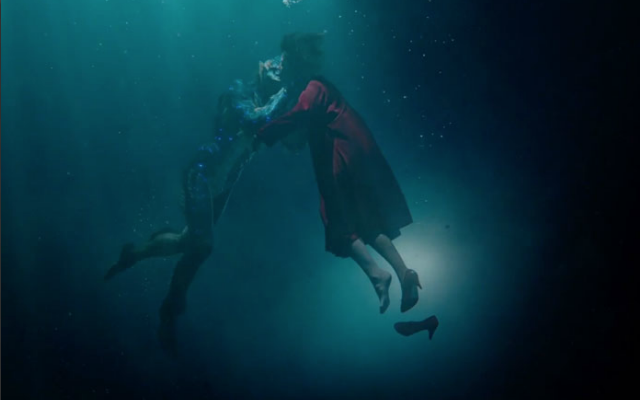
With his latest, The Shape of Water, director Guillermo del Toro redefines the age-old maxim that beauty is not skin deep for a new generation and will likely earn an Academy Award nomination in the process. The film mixes and matches the best of Beauty and the Beast and Creature from the Black Lagoon in a story about love and appearances. It’s King Kong and Edward Scissorhands. It’s E.T. and The Hunchback of Notre Dame. After seeing the trailer, director Kevin Smith tweeted: “Seeing something as beautiful as this makes me feel stupid for ever calling myself a ‘Director.’”
Around this time of year “A Christmas Carol” is omnipresent. The story of Ebenezer Scrooge’s journey of redemption, courtesy of three mysterious Christmas ghosts, runs on an endless Yuletide television loop and has been adapted as an opera, ballet, a Broadway musical, animation and even a BBC mime production starring Marcel Marceau.
A new film, “The Man Who Invented Christmas,” aims to tell the story behind the story. “Downton Abbey’s” Dan Stevens plays Charles Dickens, the Victorian writer who, when we first meet him, is out of ideas and money. “My light’s gone out,” he moans. When he devises a Christmas story, his publishers, who have gotten rich off his previous works, scoff. The holiday season isn’t a big enough deal for their readers, and it’s only six weeks away. How can he finish a novel and how can they publish it in such a short time? He perseveres and we see how real life inspiration and his imagination collide to create the self-published book that redefined Christmas celebrations for generations to come.
Using flashbacks to Dickens’s childhood in London’s workhouses and dramatic recreations of encounters with the characters—including Christopher Plummer as Scrooge—that would soon populate his book, the film attempts to show “the blessed inspiration that put such a book into the head of Charles Dickens.”
Often more literal than literate, “The Man Who Invented Christmas” is handsome film that plays like a series of “a ha” moments than a serious exploration of the creative process. What it does, however, is entertainingly paint a picture of life in Dickens’s Victorian home, and the external influences that sparked his imagination.
As Scrooge Plummer hands in a performance that makes us wish he’d play the character for real. In a very likable portrayal Stevens links Scrooge’s transformation to Dickens as he battles his own personal demons on his way to personal redemption. All bring a light touch and even when the going gets tough there is an endearing quality to the material. Even the condescending critic William Makepeace Thackery (Miles Jupp) isn’t played with malice.
“The Man Who Invented Christmas” is a festive film, a movie for the holidays that reminds us of the spirit of the season. No “Bah! Humbugs” here.
Director Richard Linklater makes films that are more interested in presenting slices of life than delving deep into story. Beautiful romantic character studies like “Before Sunrise,” or coming-of-age stories like “Boyhood” or nostalgic throwbacks like “Everybody Wants Some,” get under the skins of the people who populate them, making us care about them not just their stories. His latest, “Last Flag Flying,” fits into this mould but doesn’t have the sense of connection that makes the other films feel so memorable.
The year is 2003. Former Marine Sal Nealon (Bryan Cranston) is a Virginia bar owner with a metal plate in his head and a motor mouth. When his old Vietnam buddy Larry ‘Doc’ Shepherd (Steve Carell) shows up at the bar the two haven’t seen one another for decades, since Doc earned a Bad Conduct Discharge and was thrown into the brig for two years.
Turns out Doc isn’t just making a social call. He’s there to put the gang back together, including former badass Mueller (Laurence Fishburne), now a God fearing preacher who prefers to be called Reverend Richard. He’s leaning on his old friends in a time of grief. He would like his old buddies to accompany him to his son’s funeral. Larry was told the young man died a hero in Bagdad and will be buried with full honours at Arlington but when they arrive to view the body the father discovers a different story. It’s then he makes a profound decision. “I’m not going to bury a marine,” he says, “I’m just going to bury my son.” The old friends take the body and embark on a forlorn road trip back to Larry’s New Hampshire home for a civilian funeral.
“Last Flag Flying” is a talky affair about the passing of time, loss and disillusionment that glows with occasional moments of aching poignancy but too often feels adrift. Gifted as the leads are, they never truly bring Sal, Larry and Mueller off the page. Each man is a walking cliché, almost crushed by the weight of the heavy-handed and often overwritten script. Sombre and sentimental, it is, unlike Linklater’s other films, also largely forgettable.
Pixar’s “Coco” is likely going to be the big winner at the box office this weekend but it isn’t the only animated film on offer. “The Breadwinner” is also an animated movie with young characters but they are very different movies.
Set in Afghanistan’s capital city of Kabul in 2001 “The Breadwinner’s” story focuses on 11-year-old Parvana (voice of Saara Chaudry). When we first meet her she spends much of her time at the local market with her former school teacher father Nurullah (Ali Badshah) who now makes ends meet by selling goods and writing letters for people who can’t read or write. When he is thrown in prison for questioning the Taliban’s absolute rule Parvana must disguise herself as a boy—cutting her hair short and wearing her late brother’s clothes—to be allowed in public and help her family survive.
As you can guess, although based on a children’s book, this isn’t geared toward kids. Although animated it doesn’t cut corners in the presentation of Parvana’s shattering circumstances. The brutal reality of her life under the Taliban is painted in vivid tones but coloured with hope. As she battles against misogyny and oppression the power of storytelling, in the form of an improvised tale of the Elephant King, provides a safe haven.
By the end credits, though, it is Parvana’s determination and hero’s journey that are the film’s strongest points. Rejecting the chauvinism of her culture she uses her wits to find a path forward in life. Beautifully animated, it’s intense, inspiring and further proof that good storytelling is good storytelling regardless of milieu.