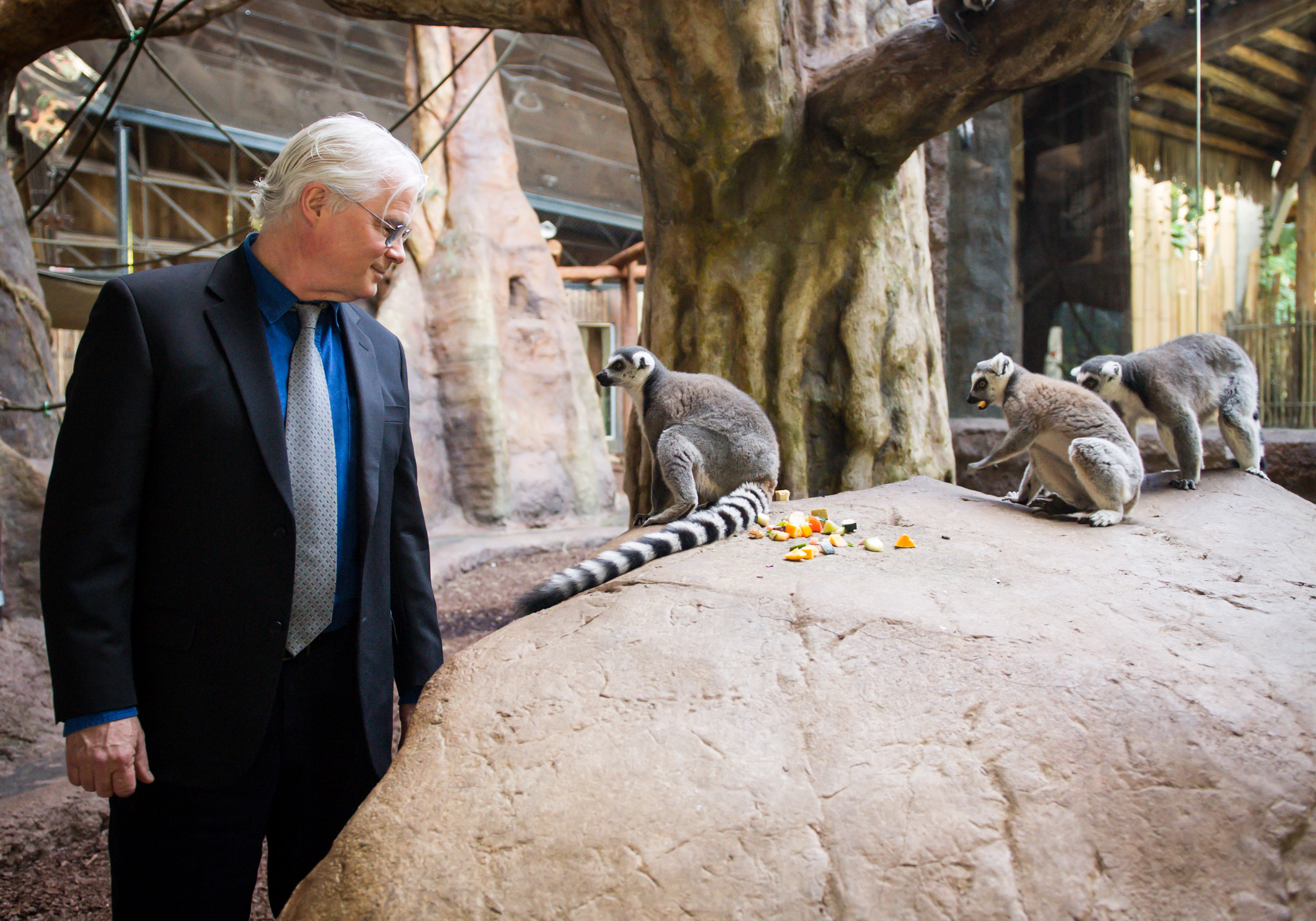
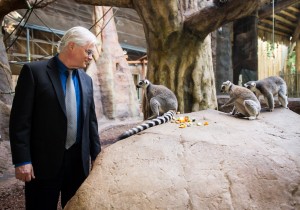
David Douglas, the veteran wildlife filmmaker behind the new IMAX film Madagascar: Island of Lemurs, has dreamed of making a film on the island country in the Indian Ocean for thirty years.
He calls it a “remote and mythic place,” but adds, “in wildlife filmmaking everybody wants to go there and do it but you never can.”
But three things convinced him to take a chance and travel there “to figure out how to make the movie.”
First was the story of primatologist Dr. Patricia Wright. Douglas came across her while doing research for another film, but was taken with her efforts to protect Madagascar’s lemurs, whose numbers are shrinking to alarming levels. Around since the time of the dinosaurs, the big-eyed creatures arrived on the island as castaways from Africa and have now evolved into hundreds of species.
Douglas wanted to shine a light on Wright’s efforts to protect the lemur’s delicate ecosystem and raise awareness of their plight.
The second thing was a technological advancement.
“The normal situation in wildlife filmmaking is you have film stock, this resource that costs money and it runs through the camera in a certain amount of time,” he says. “It can’t be any longer. You have to reload it. So you have to spend a lot of your life trying to put yourself in the position of accurately predicting what an animal is going to do in the future because you want to have your camera running while its happening. That is the foundation of all of your planning and everything you do. That’s why you never see whales coming out of the water (in movies), you always see them falling back in.”
New IMAX equipment developed for this film allowed him to shoot digitally, on cameras with lots of memory. “The camera is always on and all we do is turn it off when we like what we got.”
The third draw was, of course, the lemurs themselves.
“They are spectacular looking. They look like a pile of toys in your kid’s closet because they’re all different, but they’re all sort of similar.”
The first things you notice about them are their prominent eyes. “Their eyes are radically different colors for the different species,” says Douglas. “They have every color of the rainbow of eyes.”
“Then there is the range of physical sizes. The mouse lemurs are the smallest primate on earth and up until humans got the last ones, there were really big lemurs on Madagascar; much bigger than a human being.
“Gosh, they’re fascinating animals,” he says with a hint of wonder in his voice.
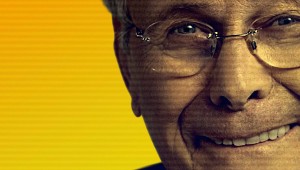
“I’m annoyed by the story,” says Academy Award winning documentary filmmaker Errol Morris. “I just imagine that our public figures, the people we have given so much authority and power would more deeply reflect on what they’re doing and what they have done. Is that too much to ask?”
The subject of his ire is also the subject of his latest film The Unknown Known, Donald Rumsfeld, architect of the Iraq War.
The movie’s name is Rumsfeld doublespeak for “things you think you know that it turns out you did not,” which is appropriate for this riveting look at one of the most controversial characters of the twenty first century’s first decade.
At age 81 Rumsfeld gamely allows Morris to probe into his entire 50-year political career, as both the youngest—under President Gerald Ford—and the oldest person—under George W. Bush—to serve as Secretary of Defence.
“A friend of mine,” says Morris, “who is a political journalist, we argued a lot about the line in the movie where Rumsfeld says that the policies of Barack Obama have vindicated the policies of George W. Bush.
“I wouldn’t quite put it that way. But he is right in one regard. Many of these policies are still around. They still exist. There are still military tribunals. There are still detainees in Guantanamo. There is still the Patriot Act.
“My political journalist friend said, ‘Well maybe, even though we don’t like to think about it this way, are still living in a Rumsfeld world. The world he created.’
“I think that’s what is really important at the heart of this movie. It’s not like the Bush Administration disappeared when Barack Obama was elected and reelected. It didn’t. Those policies still linger on for whatever reason. Perhaps because we have a Republican congress, perhaps for other reasons but they changed everything, but they didn’t change everything for the better and we’re going to have to reckon with that for many, many years.”
I tell Morris I think he should consider using the tagline “It’s Rumsfeld’s World. We Just Live in It,” to promote the movie. “Think about it,” I said.
“I have thought about it!” he quickly replied shaking my hand. “I like it. As long as we don’t have to pay you it’s a deal.”
According to Genesis God said to Noah, “I am going to put an end to all people, for the earth is filled with violence because of them.”
Noah, a righteous man, was commanded to build an ark and stock it with “two of every kind of bird, of every kind of animal and of every kind of creature that moves along the ground will come to you to be kept alive.”
For forty days and forty nights Noah, his family and precious cargo withstood a flood so severe it submerged the tops of mountains until “every living thing on the face of the earth was wiped out.”
Once the flooding stopped and the Earth dried, God commanded Noah to come out of the ark and release the animals, “so they can multiply on the earth and be fruitful and increase in number on it.”
The story of Noah’s Ark and the flood is one of mankind’s most famous tales and Hollywood has retold it a number of times.
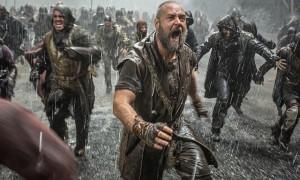
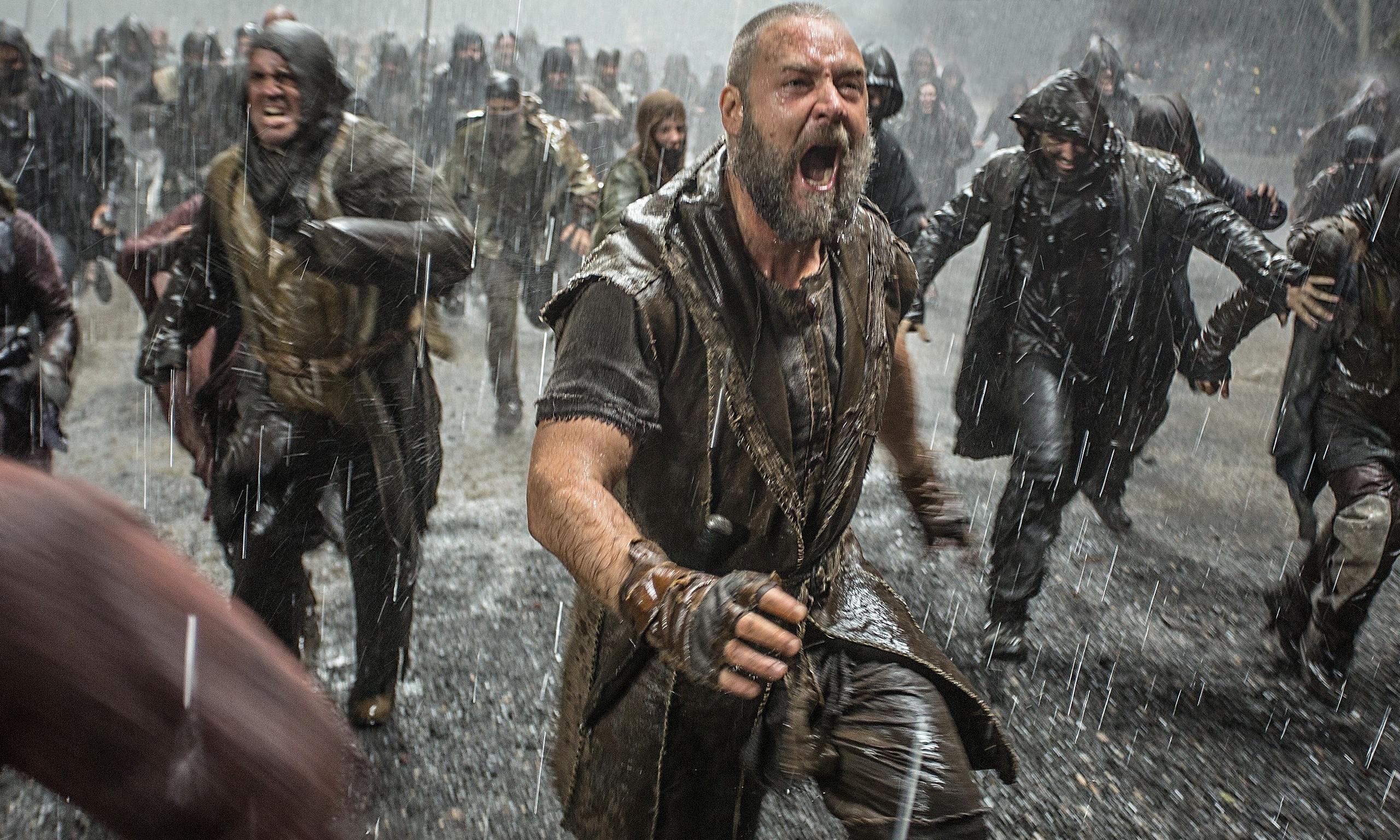
This weekend Russell Crowe plays the title role in Noah, co-starring with Jennifer Connelly, Anthony Hopkins and Emma Watson. Director Darren Aronofsky says he has been obsessed with the story since he was thirteen, calling it “the first apocalypse story.” Nonetheless, he has added his own spin to the tale.
“When we first started working on the project, we were very clear not to have sandals and robes and long white beards,” he told Rolling Stone. “The first thing I said to Russell Crowe was, ‘I’ll never shoot you on a houseboat with two giraffes standing behind you.’”
More traditional are two Disney short films. Father Noah’s Ark is a 1933 “Silly Symphony” for children that tells the narrative in song. Lively animation shows how the animals may have helped build the ship and why skunks almost didn’t make it on board.
In 1959 Disney released the twenty-minute Noah’s Ark, their first stop motion animated film. A jazzy score accompanies equally jazzy animation as pencils, pipe cleaners and other household items are inventively used to create the animals.
Shooting the flood scene in the 1928 version of Noah’s Ark endangered the life of a future Hollywood icon. John Wayne was a swimmer in the famous scene, and emerged unhurt, but other weren’t so lucky. Three extras drowned and a dozen others suffered broken limbs.
Finally, a 1977 documentary claims to shed some light on the real story. In Search of Noah’s Ark is an investigation into the speculation that Turkey’s Mt. Ararat in is the landing place of Noah’s Ark. “This may be the most incredible film you will ever see,” says narrator Brad Crandall, “but the facts that will be presented are true.”
I have a secret to tell you that I think Miss Piggy would rather remain undisclosed.
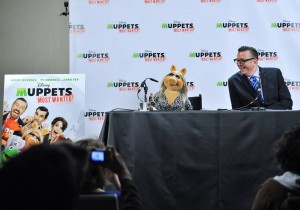
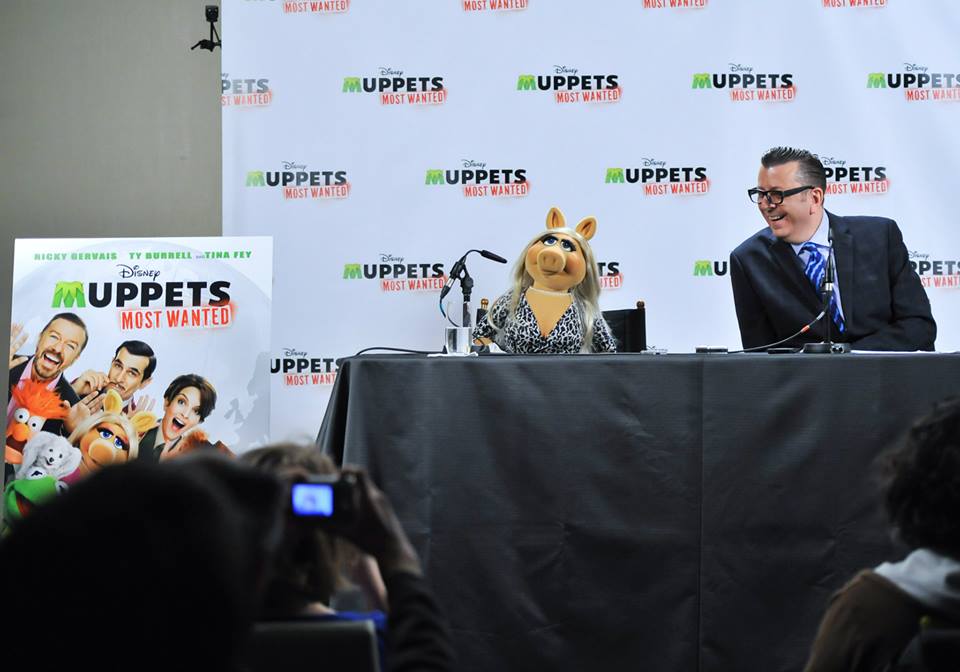
The blonde bombshell, that porcine paradigm of perfection, was in Toronto on Tuesday to do some press for her new film Muppets Most Wanted, and sit in for a press conference hosted by moi.
Like everyone else I had heard the stories. The word diva comes up frequently when Miss Piggy is discussed. She has a No Competing Diva clause in her contracts and has even written a book titled The Diva Code.
In the film she does a duet with Celine Dion, and when asked who was the biggest prima donna on set she snapped back, “Well, naturally moi.” I’m here to tell you it’s not true.
She was on time, primped and ready to go and had very funny answers to all the questions. She admits to enjoying “making a statement wherever she goes,” and Tuesday’s presser was no exception. When I asked her if she got star struck around co-stars Tina Fey and Ricky Gervais, she said it’s others who get star struck by her, before adding, “others are struck by a star if they get between moi and the camera.”
The only hint of diva-ish behaviour came when she was asked who could portray her in a biopic. “Moi, of course,” she said, but later when asked if she knew she was a gay icon she replied, in a most un-diva-like way, “I’m an icon to anyone who will have moi!”
When The Muppet Movie was released in 1979 the Muppet Show Fan Club pointed out the differences between the movie and the puppet’s popular television show.
“If you think it’s a film version of The Muppet Show, you’re in for a surprise.
For one thing, it doesn’t take place in the theatre. The Muppet Movie is set in the real world — it’s like waiting in line at a gas station and looking up to find Fozzie and Kermit driving the next car over.”
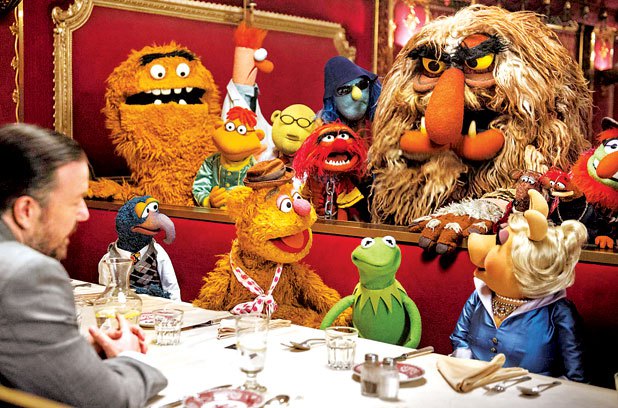
In the subsequent seven theatrical Muppet movies that magic has been maintained, but the methods have changed over the years. In 2011’s The Muppet Movie all the puppets were real, but the way they were filmed changed. To give the puppets a full range of movement the puppeteers — or Muppeteers as they prefer to be called — were often in full view of the camera and digitally removed in post production.
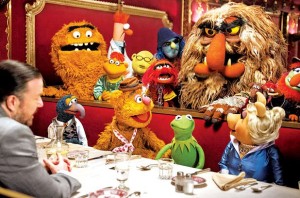
“We removed the puppeteers later,” said visual effects artist Max Ivins, “so it gave the puppeteers a lot more freedom in that they didn’t have to hide from the camera to do everything.” It’s a technique used in Muppets Most Wanted, which sees the furry and felt puppets get into trouble on a world tour when it turns out that Kermit’s doppelgänger is the world’s number one criminal. Co-starring with the Muppets is Ricky Gervais, Ty Burrell and Tina Fey. In the years before computer generated imagery, however, Muppeteers hidden from view manipulated all the puppets. And it wasn’t always so comfortable.
Everyone remembers Kermit sitting on a log, playing his banjo, in the middle of a swamp in The Muppet Movie, but did you know that Jim Henson, Kermit’s creator and operator until 1990, was under water for the five days it took to shoot the scene?
According to the Muppet Fan Club he was wedged into a metal tube “under the water, under the log, under the Frog” while hooked up with an air hose, a monitor and a rubber sleeve which allowed him to manipulate the puppet.
Frank Oz was also submerged for Miss Piggy’s water ballet scene in The Great Muppet Caper. “I was under the water for a week,” he says. “I had three days of scuba training and then down I went.” Finally, almost every Muppet movie features Kermit riding a bicycle. How did they do it in the early days? Director James Frawley jokes, “I put him on a three-wheeler until he got his balance, and then I put him on the two-wheeler.”
In fact, the effect was achieved by intercutting long shots using a Kermit marionette and close-ups with a hand puppet operated by Henson who rode along with the bike on a low-rolling dolly.
The Husband begins with a premise we’ve all heard before, a romantic triangle. There’s a husband, a wife and a lover but, as director Bruce McDonald points out, “in this case the lover is fourteen years old and the wife is in jail.”
The movie is a dark dramedy about Henry, (Maxwell McCabe-Lokos, who also co-wrote the script), struggling to deal with the shame he feels when his wife is jailed for having an affair with a minor.
“The script really tries to understand what the male goes through in this crazy situation,” says McDonald. “It’s about regaining your mojo, about reclaiming your masculinity and power and it was written as a suspense story.
There was this ‘What’s this guy going to do’ thing all the way along. It was set up as a revenge movie. We meet our character and he is going through his day-to-day and one day, on the street, he sees the kid. The kid that did the deed. That sets off the movie, so it’s this cat and mouse game throughout the whole movie. I just loved the way it was constructed and the suspense of it. What is our character Henry going to do when he finally confronts the kid?
“He begins to do irrational things. First he’s trying to befriend this kid and get on his good side. To do what? And then other elements come into play where he is preparing something that you might think is a violent end to this confrontation. Henry is a mysterious and enigmatic character looking for some kind of closure on being the humiliated, cuckold husband.”
The edgy film premiered at the Toronto International Film Festival in 2013. McDonald admits to being “very surprised at the reaction.”
“People were very taken with this movie,” he says. “They went in deep. I think they loved the oddness and the suspense of the story. They loved the situation and I think they loved how authentic and true it seemed to be in terms of the performances by Maxwell and Sarah Allen.
“Usually at the festival there’s two or three screenings. In this case the screening venues kept getting bigger and bigger which is always a bit frightening because the first screening is usually well attended and by the third you’re not quite sure what’s going to happen but our third screening was packed to the rafters.”
Jay Ward may not a household name, but many of the characters he created are.
As the Grand Poobah at Jay Ward Productions he produced the animated television shows that gave us Rocky & Bullwinkle, Dudley Do-Right, Peabody and Sherman and George of the Jungle among others.
His cartoons weren’t just for kids. The Los Angeles Times wrote, “The good ones, which Ward was a master at creating, worked at two levels: one direct and another wonderfully satiric.”
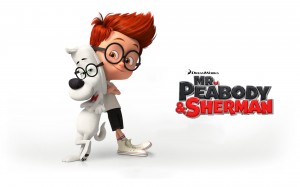
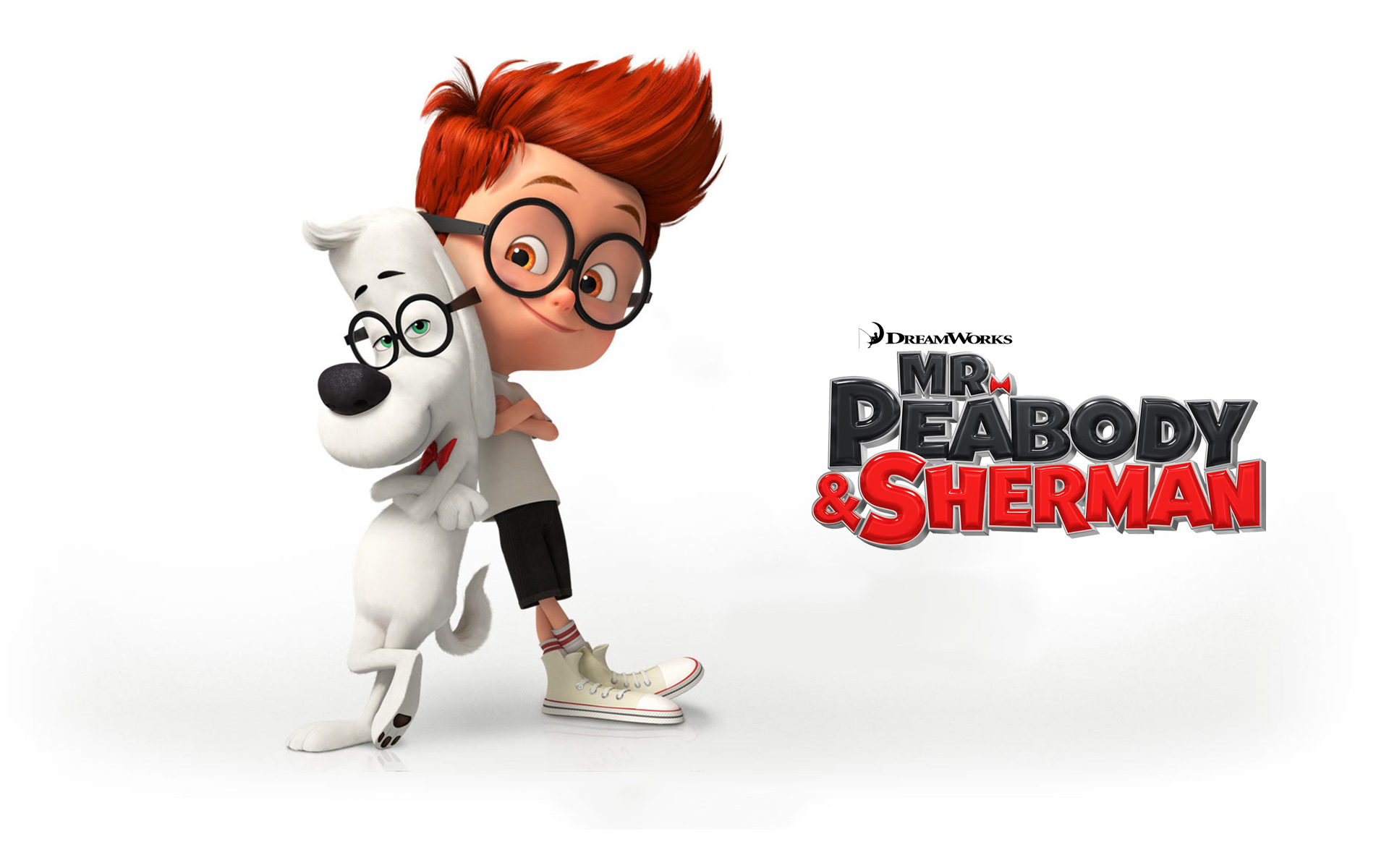
This weekend his characters take over the big screen in Mr. Peabody & Sherman, an animated film starring the voices of Modern Family’s Ty Burrell, Stephen Colbert and Leslie Mann.
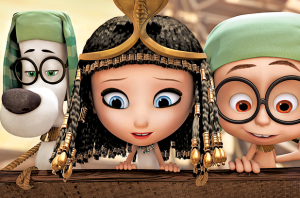
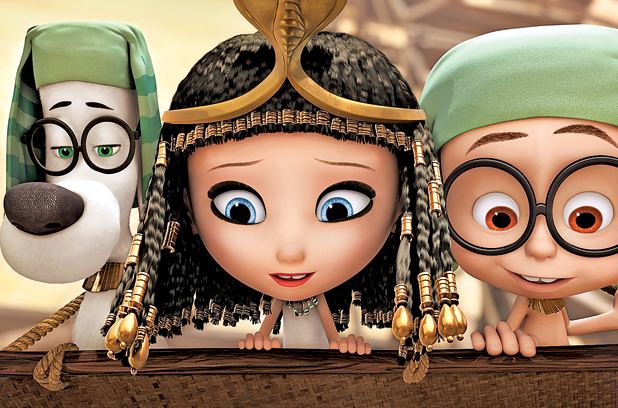
Based on Peabody’s Improbable History segment from the Rocky and Bullwinkle Show, the movie sees the duo use the WABAC machine to ping pong through time, interacting with everyone from Marie Antoinette to King Tut to Leonardo da Vinci and Albert Einstein.
Mr. Peabody & Sherman isn’t the first film based on Ward’s characters.
In a 199 television movie (originally shot in 1988 for theatrical release) SCTV alum Dave Thomas played Boris Badenov, “world’s greatest no-goodnik.” With his partner-in-crime Natasha Fatale (Sally Kellerman) he leaves Pottsylvania for the United States to retrieve a micro-chip. TV Guide said, “as a 90-minute feature film, it’s at least 80 minutes too long,” but it’s worth a gander to see one of the rare live action performances of June Foray, the original voice of Rocky.
Brendan Fraser brought two of Ward’s characters to life, George of the Jungle and Dudley Do-Right.
George of the Jungle is a riff on Tarzan. He’s boy raised in the jungle by an ape (John Cleese) but who never mastered the art of swinging from tree to tree. Rotten Tomatoes gives it a 56% Fresh Rating, but the film remains most memorable for the catchy “George, George / George of the Jungle / Strong as he can be / Watch out for that tree,” theme song by the Presidents of the United States of America.
Two years later Fraser was back in another Ward inspired movie about a bumbling Canadian Mountie called Dudley Do-Right who “always gets his man.”
Co-starring with Sarah Jessica Parker and Alfred Molina, the story saw Dudley track his nemesis, the depraved Snidely Whiplash. Bad reviews—USA Today’s called it a “Dead-carcass spinoff of Jay Ward’s animated TV favorite.”—doomed the movie, but the character lives on as part of an amusement park ride called Dudley Do-Right’s Ripsaw Falls at the Islands of Adventure theme park.
Finally, despite an big name cast—Jason Alexander, Rene Russo and John Goodman—The Adventures of Rocky & Bullwinkle bombed at the box office despite Robert De Niro doing a take on his famous “You talkin’ to me?” speech from Taxi Driver.
“The Whistler Film Festival was the first opportunity I got to sit in a room with strangers and have them watch the movie and I was very nervous going into it,” says comedian Brent Butt about his new film No Clue.
In the film he stars as Leo, a mild mannered Vancouver tchotchke salesman lured into a murder mystery by a femme fatale played by Amy Smart. “It’s a very dark, classic kind of detective mystery but the main characters say funny things,” says Butt.
“We really felt, totally objectively, that we made the movie we wanted to make but that part of my brain that is the stand up comic said, ‘What you think doesn’t really matter. The audience will let you know,’ and the audience is everything to me.
“Long before Corner Gas came around I was just a greasy nightclub comic, out there getting it done. When you are doing that you always have the ability to shift gears. You think, ‘They’re not buying the sports stuff so I’ll talk about politics,’ but with this movie if they’re not liking it five minutes in you can’t say, ‘Everybody go get a drink. I’m going to reedit this.’ You are locked in.”
Audience reaction was “better than we ever could have imagined” for a movie he calls a “tricky balancing act.”
“I wanted to make a movie that if it wasn’t funny would still be entertaining. It would still be thrilling and a mystery and have all those good, juicy elements and then the funny kind of folds in like gravy. It’s on top of everything else.
“From the writing stand point there were a lot of funny jokes I neglected to put in the movie because I felt this is funny but it is ultimately going to damage the reality. For this movie to work it has to feel real. One of the things we did early on was tell everybody to forget that this is a comedy. Pretend you are making a dark murder mystery. That’s what this is. The comedy will come in elsewhere.”
Butt cites a famous example of the kind of film he wanted to make.
“Beverly Hills Cop was written not to be a funny movie. It was written to be a thriller and then they cast Eddie Murphy and said, ‘Let’s make it funny.’ But if you take all the funny things that Eddie says out, it still holds water as an action movie.”
Rob Minkoff may always be best known as the co-director of The Lion King, one of the biggest animated hits of all time, but long before he brought Simba, Mufasa and Scar to life, he was a fan of a dog named Mr. Peabody.
Mr. Peabody is a beagle in the world of humans — imagine Family Guy’s Brian with less attitude but more PhDs. He’s a Harvard grad, a Nobel Prize winner, advisor to heads of state and in his spare time he invented planking and auto tune.
With his adopted human son Sherman, he’s also a time traveller, taking the WABAC machine — “It’s not WHERE we’re going, but WHEN!” — to various spots in history in a weekly segment on the show Rocky and His Friends called Peabody’s Improbable History.
“Whenever it came on, I would watch it,” says Minkoff, director of the new animated film Mr. Peabody & Sherman, “so I’ve seen all the episodes multiple times.
“I was always a fan but I don’t recall thinking, ‘Oh, that would make a great movie one day.’ It didn’t occur to me that way. It all started 12 years ago with a conversation I had with (executive producer) Jason Clark. He came to me and said, ‘What do you think of Mr. Peabody and Sherman?’ My answer was, ‘I love them.’ He said, ‘What about making a movie out of them.’ I thought, ‘They’re great characters. There’s a lot to them. There is an unexplored well of stuff, like the time machine and time travel.’”
That was 12 years ago. “Once you get your teeth into something creatively,” he says, “you never really let go.”
Over the years the idea for the film has shifted and changed. At the very early stages it was suggested that the movie could work as a live action story.
“It didn’t take very long for me to come around to the idea that I would prefer to do this as an animated movie because I didn’t understand how it would work as a live action thing. It would lose some of its appeal, some of the quirkiness of it.”
The film retains the eccentricity of the original series: It’s probably the only kid’s movie with an Oedipal joke. But Minkoff hopes the movie will appeal to all ages.
“The original show was always popular among college educated, smarter people, and that was something we thought was important but at the same time, we wanted to) make it kid friendly.
“I didn’t want to copy (the TV show) exactly because I couldn’t possibly do that. So it was taking the spirit of it and letting that be. Trying to get to the core of what it is rather than the surface.”
 By Richard Crouse – Metro Canada